The Shift from Reactive to Intelligent Infrastructure
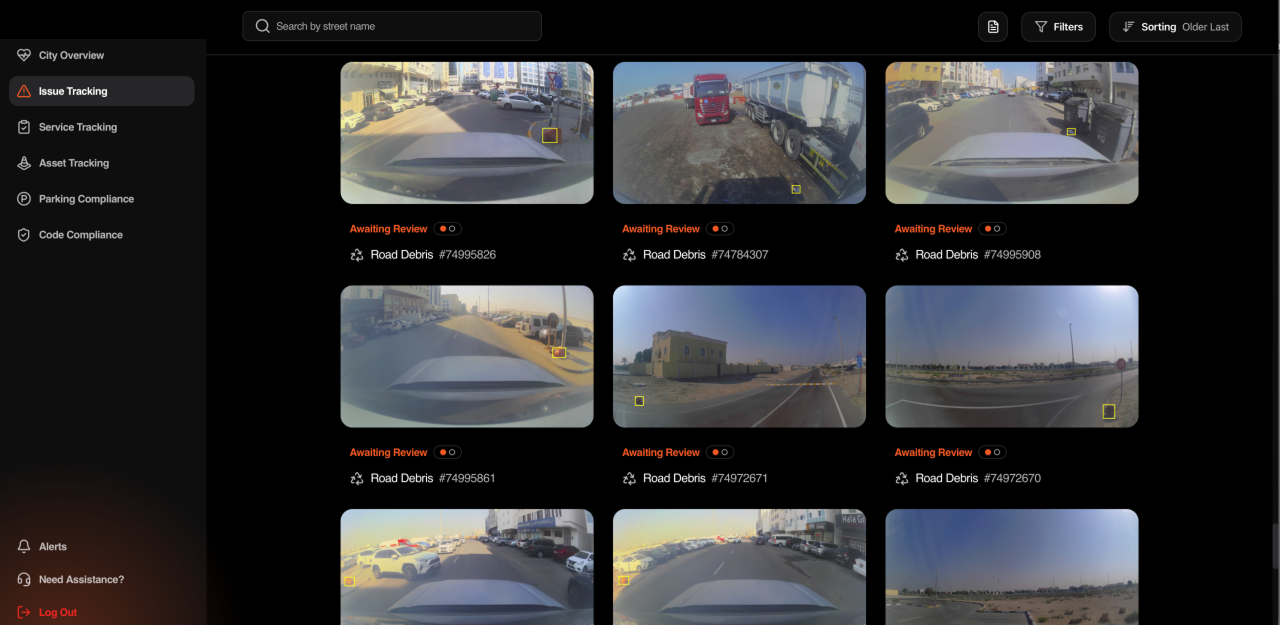
EchoTwin AI CityView: The Unified Platform for Intelligent City Operations
The Shift from Reactive to Intelligent Infrastructure
Cities don’t suffer from a lack of data.
They suffer from a lack of coordination.
Over the past decade, governments have deployed dozens of “smart city” tools: asset inventories, inspection platforms, work-order systems, enforcement cameras, digital twins, analytics dashboards. Each solves a narrow problem. None solve the whole one.
The result is a city that can see issues—but struggles to prioritize them, act decisively, and prove they were resolved.
What’s missing isn’t technology.
It’s a nervous system.
Why cities need a nervous system
A functioning nervous system does four things seamlessly:
Senses the environment continuously
Interprets what matters
Triggers action
Learns from outcomes
Most city systems stop at step one—or, at best, step two.
They observe. They report. They visualize.
But they don’t close the loop.
EchoTwin AI was built to solve that exact gap.
One unified platform, not a collection of tools
EchoTwin is a single, end-to-end platform that unifies:
Asset intelligence
Infrastructure operations
Enforcement-grade compliance
Instead of stitching together point solutions, EchoTwin provides one cohesive system that connects observation → reasoning → action → verification, with auditability built in.
The platform turns municipal fleets—buses, sanitation trucks, sweepers, service vehicles—into mobile sensing infrastructure. Every mile driven becomes coverage. Every observation feeds a shared intelligence layer.
That same system:
Detects infrastructure issues
Understands them in policy-aware terms
Routes them to the right agency or vendor
Tracks resolution
Automatically re-verifies that the issue was fixed
This is how a city moves from passive monitoring to operational execution.
Proactive systems aren’t enough anymore
For years, the goal has been “proactive.”
Detect issues earlier. Respond faster. Reduce lag.
That’s necessary—but no longer sufficient.
Cities don’t just need systems that act proactively. They need systems that learn.
A proactive system fixes the same problem faster. A learning system reduces how often the problem happens at all.
Learning systems:
Recognize recurring patterns, not just one-off incidents
Adapt policies based on real-world outcomes
Improve prioritization with every cycle
Reduce repeat failures instead of accelerating response
Turn enforcement and operations into feedback loops
This is the difference between automation and intelligence.
From closed loops to learning loops
EchoTwin’s platform doesn’t stop at closing the loop.
It compounds value with every pass.
Because detections, actions, and outcomes all live in the same system, the city gains institutional memory:
Hotspots become quantifiable patterns
Chronic failures inform planning and capital decisions
Policy thresholds evolve based on effectiveness
Resource allocation improves over time
The street becomes a continuously improving system.
Proof at scale
This isn’t theoretical.
In Abu Dhabi, EchoTwin has already:
Identified 100,000+ infrastructure issues
Actively monitored 353,000+ city assets
Using the same unified platform to detect, prioritize, route, and verify—at scale, in real-world conditions.
Why this hasn’t existed before
Building a unified, learning system for cities is hard.
It requires:
AI that works reliably on the edge, in motion, in real environments
A common data model across agencies without losing specificity
Policy-aware intelligence—not just object detection
Closed-loop workflows built into the core platform
Evidence chains that stand up to audits, disputes, and public scrutiny
Most vendors chose one lane. EchoTwin chose the system.
The future: self-healing city operations
The next generation of cities won’t be defined by how many dashboards they have. They’ll be defined by how quickly they detect issues, how intelligently they prioritize them, how reliably they resolve them—and how effectively they learn.
Every detection should drive action.
Every action should be auditable.
Every fix should be re-verified.
Every cycle should make the city smarter.
That’s what a nervous system does.
That’s what EchoTwin delivers.
When a city’s technology can see, think, act and learn, the street becomes a continuously improving system—one where every mile driven, every issue resolved, and every policy enforced makes the next decision smarter.
Proactive fixes keep cities running.
Learning systems make them resilient.
That’s the future of urban infrastructure. That’s what Physical AI makes possible—not as a concept, but as deployed reality.